

Introduction
Education has changed significantly in recent years. Students are no longer dependent only on textbooks, classrooms, and traditional teaching methods to develop knowledge. The internet has created access to digital courses, educational articles, study applications, online libraries, tutorials, academic resources, and interactive learning platforms. This wider digital environment gives students more opportunities to learn at their own pace, but it also creates a new challenge: finding useful information among the enormous amount of content available online.
In this environment, educationbeing com can be explored as a topic connected with digital learning, educational resources, student development, and modern approaches to gaining knowledge. Whether a learner is preparing for an examination, researching a difficult subject, improving a professional skill, or simply developing a new interest, online educational resources can make learning more flexible and accessible. The most useful resources are those that explain concepts clearly, encourage independent thinking, and help learners apply knowledge in practical situations.
Modern students also need more than academic information. They increasingly need digital literacy, time-management skills, research abilities, communication skills, and the confidence to evaluate online information. Education today is therefore becoming a combination of formal learning and continuous self-development.
Understanding EducationBeing Com in the Digital Learning Environment
The idea behind educationbeing com can be considered within the broader world of online educational information. Students and learners regularly search the internet for explanations, study methods, learning materials, technology guides, career information, and resources that can make difficult subjects easier to understand. A useful educational resource should help readers move beyond simply collecting facts and encourage them to understand how information can be applied.
For example, a student studying science may find a textbook explanation useful but still need a visual example or practical explanation to understand a difficult concept. Similarly, a learner studying a language may benefit from grammar explanations combined with examples and regular practice. Digital resources can complement traditional education by offering different ways to approach the same subject.
When exploring an unfamiliar education-related website or resource, users should consider its purpose, organization, relevance, and the quality of the information provided. Readers should also check whether information is current, particularly when studying subjects affected by new research, technology, regulations, or changing professional requirements.
Why Online Educational Resources Matter Today
Online education has become an important part of modern learning because it removes many traditional limitations. A learner does not necessarily have to be in a classroom to access useful explanations. With an internet-connected device, students can review lessons, watch instructional videos, practice questions, read research material, and explore subjects beyond their regular curriculum.
The importance of resources related to educationbeing com can be understood from this broader shift toward flexible learning. Students have different learning speeds and different academic needs. One learner may understand a topic immediately, while another may need several explanations before the concept becomes clear. Online resources allow learners to revisit information and explore alternative explanations without feeling pressured to keep pace with an entire classroom.
This flexibility can also benefit working professionals and adult learners. Someone learning a new software program, preparing for a certification, improving communication skills, or exploring a career change can use digital educational resources outside traditional academic schedules. Learning is increasingly becoming a continuous activity rather than something limited to a particular stage of life.
How Students Can Use Digital Learning Resources Effectively
Having access to educational content does not automatically guarantee better learning. Students need to approach online resources with a clear purpose. Instead of opening dozens of pages and collecting information without a plan, learners can begin with a specific question or learning objective. They can then identify suitable resources, study the material carefully, and test their understanding through practice.
A student preparing for an examination, for example, might use an educational article to understand a concept, a video to visualize it, practice questions to test comprehension, and personal notes to reinforce important points. This combination is often more useful than repeatedly reading the same material without active engagement.
Resources associated with educationbeing com can therefore be viewed as part of a larger learning process rather than a replacement for teachers, textbooks, or established educational institutions. Digital content can provide additional explanations and perspectives, while students remain responsible for checking important information and adapting study methods to their individual needs.
Digital Tools That Support Modern Students
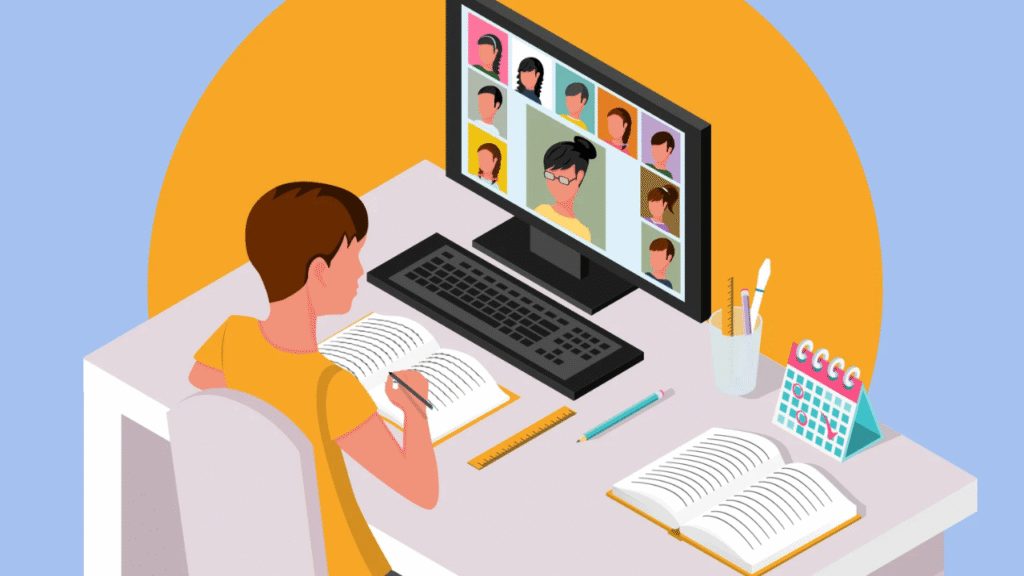
Technology has introduced many tools that can make studying more organized. Note-taking applications allow learners to keep information in one place, cloud storage makes documents accessible across devices, calendars help organize deadlines, and educational platforms can provide structured lessons. These tools can be particularly helpful when students are balancing multiple subjects or activities.
However, technology should support learning rather than become a source of distraction. A student can install numerous productivity applications and still struggle with organization if there is no clear study routine. The most useful digital tool is often the one that solves a specific problem without adding unnecessary complexity.
| Digital Resource | Main Learning Purpose | Example Benefit |
|---|---|---|
| Online courses | Structured learning | Step-by-step skill development |
| Digital libraries | Research and reading | Access to educational material |
| Study applications | Practice and revision | Regular learning activities |
| Note-taking tools | Organization | Easier review of important ideas |
| Educational websites | General knowledge | Quick explanations and guidance |
The broader educationbeing com concept fits naturally into this digital learning environment because students increasingly combine multiple types of resources. Instead of depending on a single format, learners can select the method that best suits a particular subject or task.
Building Better Study Habits
Good study habits remain important even when technology provides convenient access to information. Students can improve their learning by creating realistic schedules, dividing large subjects into smaller sections, and reviewing material regularly. Consistency is often more effective than attempting to study a large amount of information immediately before an examination.
Active learning can also improve understanding. Rather than simply reading a chapter repeatedly, students can explain a concept in their own words, create examples, solve practice questions, or discuss the subject with classmates. These activities encourage deeper processing and make it easier to identify areas that still need attention.
A practical study routine may include:
- Setting a clear learning objective before each session.
- Breaking difficult subjects into manageable topics.
- Taking short breaks during longer study periods.
- Reviewing previously learned material regularly.
- Practicing concepts instead of relying only on passive reading.
These habits can make digital resources more effective because students are using information as part of a structured learning process.
The Importance of Information Literacy for Students
The internet provides an enormous amount of educational information, but not everything published online is equally reliable. Students need to understand how to evaluate sources before using information in assignments, research projects, presentations, or important decisions. This is particularly relevant when search engines return thousands of results for a single question.
Information literacy involves considering who produced the content, when it was published, what evidence supports its claims, and whether other credible sources provide similar information. Students should also distinguish between educational explanations, personal opinions, promotional material, and authoritative sources.
When exploring educationbeing com or any other digital education resource, this habit of evaluation can help learners avoid relying on outdated or unsupported information. For academic work, students should follow the source requirements provided by their teachers or institutions and use appropriate academic references when necessary.
Technology and Personalized Learning
One major development in modern education is the growing ability to personalize learning. Digital platforms can allow students to choose different levels of difficulty, repeat lessons, receive immediate feedback, or focus on specific areas where they need improvement. Artificial intelligence is also increasingly being incorporated into educational technologies, creating new possibilities for tutoring, practice, feedback, and content organization.
Personalization can be useful because students do not all learn in exactly the same way. Some learners benefit from visual explanations, while others prefer reading detailed material or practicing through questions. Technology can provide multiple formats, allowing students to select methods that support their individual learning preferences.
At the same time, technology should not replace critical thinking. Learners should understand the difference between receiving an answer and understanding how to reach that answer. This distinction becomes especially important when using AI-powered tools, where students need to verify information and ensure that technology supports genuine learning rather than simply completing academic work for them.
Supporting Different Types of Learners
Educational resources can serve a wide range of audiences. School students may need help understanding fundamental concepts, college students may require research material, and professionals may seek resources for continuing education. Each group has different goals, but all learners benefit from clear explanations and organized information.
Students can use digital resources to strengthen subjects they find challenging, while professionals can use them to keep their skills current. Lifelong learners may explore completely new fields simply because they are interested in them. This broader approach makes online education valuable beyond conventional academic settings.
The usefulness of educationbeing com can therefore be viewed through the larger idea of accessible learning. A resource becomes more valuable when it helps different readers understand information at an appropriate level and provides practical context instead of presenting isolated facts.
Balancing Online and Traditional Education
Digital learning does not necessarily have to compete with traditional education. Teachers, classrooms, textbooks, laboratories, libraries, and discussions continue to provide important learning experiences. Online resources can complement these methods by offering additional explanations and opportunities for practice.
A student may attend a classroom lesson during the day and later use digital resources to review difficult material. Another learner may use an online course to develop a skill that is not available through their regular curriculum. This combination can create a more flexible learning experience.
The most effective approach depends on the learner’s needs. Some subjects require practical experience, personal instruction, or direct feedback, while others can be studied effectively through independent digital resources. Understanding this difference helps students choose appropriate learning methods.
Preparing Students for Future Careers
Education increasingly involves preparing students for a workplace influenced by technology. Employers across many industries use digital systems, collaboration platforms, data tools, automation, and specialized software. As a result, students benefit from developing both subject knowledge and transferable digital skills.
Communication, problem-solving, research, teamwork, adaptability, and information evaluation can be valuable across many careers. Students who learn how to use technology responsibly can also adapt more easily when workplace tools change.
The broader educationbeing com topic can be connected with this idea of continuous development. Education is not simply preparation for an examination; it can also provide the foundation for learning new skills throughout a career. Developing curiosity and the ability to learn independently can become valuable long-term advantages.
Common Challenges in Digital Learning
Although online education offers many advantages, it also presents challenges. Distractions are one of the most common problems. A student may begin researching an academic topic and quickly become distracted by social media, entertainment, notifications, or unrelated websites. Creating a focused study environment can reduce this problem.
Another challenge is information overload. Too many resources can make it difficult to decide what to study first. Students can address this by setting specific goals and selecting a small number of reliable resources rather than attempting to consume everything available.
Online learning also requires self-discipline. Without a fixed classroom schedule, learners may postpone tasks or lose motivation. Creating routines, setting realistic deadlines, and tracking progress can help maintain consistency.
Using Education Resources Responsibly
Responsible learning involves more than finding information. Students should respect copyright, academic integrity, privacy, and the rules of their educational institutions. Copying material without proper attribution can create academic problems, while sharing personal information on unfamiliar platforms can create privacy risks.
Students should also be careful when using AI-based educational tools. AI can help explain concepts, generate practice questions, organize notes, or suggest study approaches, but learners should verify important information and ensure that submitted academic work reflects their own understanding where required.
When using resources connected with educationbeing com, the same principles apply. Students should evaluate information carefully, protect personal details, and use online resources as learning aids rather than assuming every digital answer is automatically correct.
Future of Digital Learning
The future of education is likely to combine traditional teaching with increasingly sophisticated digital resources. Artificial intelligence, interactive learning environments, virtual classrooms, cloud-based collaboration, and adaptive learning technologies may continue changing how students access and practice knowledge.
However, the fundamental purpose of education will remain focused on understanding, critical thinking, creativity, and the ability to apply knowledge. Technology can make learning more accessible and flexible, but students still need curiosity, discipline, and the willingness to question information.
Future learners may have access to more educational resources than any previous generation. The challenge will therefore be less about finding information and more about identifying useful information, understanding it deeply, and applying it responsibly.
Frequently Asked Questions
What is EducationBeing Com?
EducationBeing Com can be explored as a topic related to educational information, digital learning, student resources, and modern approaches to gaining knowledge. Users should assess the specific content and purpose of any website or resource directly.
How can students benefit from online educational resources?
Students can use online resources to review difficult subjects, discover alternative explanations, practice skills, conduct research, and explore topics beyond their regular curriculum. Digital resources can complement classroom learning when used thoughtfully.
Are online educational resources suitable for beginners?
Yes. Many digital resources are designed to introduce subjects gradually. Beginners should look for clear explanations, practical examples, organized content, and learning material that matches their current level.
How can students identify reliable educational information?
Students should examine the source, publication date, evidence, author or organization, and purpose of the content. For academic assignments, they should also follow the citation and source requirements provided by their school, college, or university.
Can technology improve study habits?
Technology can support study organization through calendars, reminders, digital notes, online practice tools, and educational platforms. However, these tools are most effective when combined with consistent routines and active learning.
Why is digital literacy important for students?
Digital literacy helps students search for information, evaluate sources, protect their accounts, use online tools responsibly, and adapt to changing technology. These abilities are increasingly relevant to both education and future employment.
Conclusion
Modern education extends far beyond the traditional classroom. Students and lifelong learners now have access to digital courses, educational websites, online libraries, study applications, productivity tools, and technology-based learning environments. These resources can make education more flexible, but their value depends on how thoughtfully learners select and use them.
EducationBeing Com can be considered within this larger movement toward accessible digital learning and practical educational knowledge. The most effective approach is not to collect as much information as possible but to identify reliable resources, understand concepts deeply, practice new skills, and connect learning with real-world situations.
As technology continues to influence education, students will need both traditional academic knowledge and strong digital literacy. Learning how to research, evaluate information, use technology responsibly, and adapt to new tools can support learners throughout their education and careers. With consistent study habits, critical thinking, and responsible use of online resources, modern learners can turn the growing digital information environment into a meaningful opportunity for continuous growth.

